
Cupping Therapy
Cupping is one of the oldest hands-on therapies in the world, and it is still one of the simplest ways to release tight, overworked muscles. At Apex Health Acupuncture and Chiropractic, our acupuncturists and chiropractors use cupping on its own or alongside acupuncture, chiropractic adjustments, and medical massage to ease muscle tension, support circulation, and help you move more comfortably.
What is cupping?
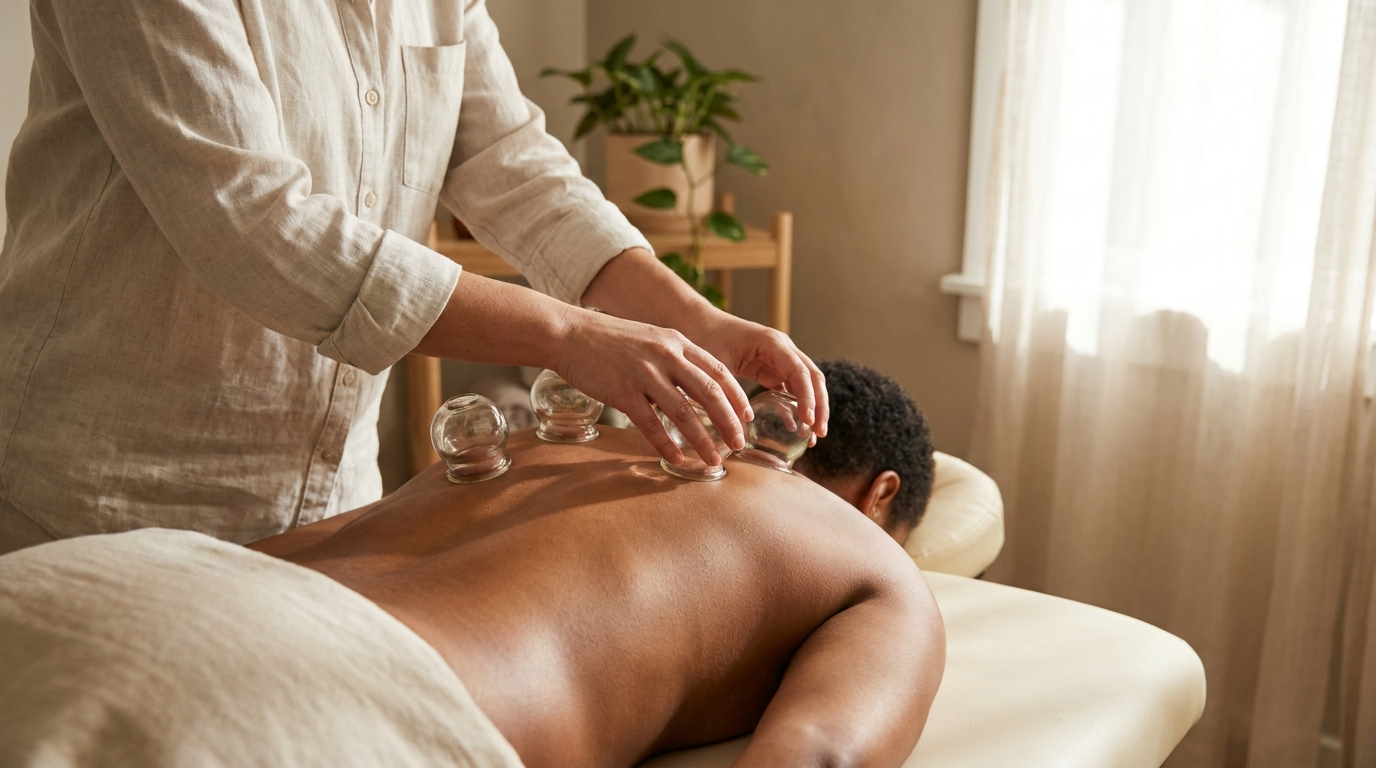
Cupping uses small cups placed on the skin to create gentle suction. That suction lifts the skin and the layer of connective tissue (fascia) just beneath it, drawing blood into the area. Think of it as the reverse of a massage: instead of pressing down into a tight muscle, cupping gently pulls it upward, which can help loosen stubborn knots that are hard to reach by hand. It is a complementary therapy, meaning we use it to support your recovery rather than to replace medical care.
How cupping works
A cup is placed on the skin and air is removed to create suction, either with a hand pump or, in fire cupping, by briefly warming the air inside the cup before it is applied (the cup is only warm, not hot, when it touches you). The cup stays in place for a few minutes, or is glided across oiled skin for a massage-like effect. The suction increases local blood flow, which is thought to help relax tight muscle fibers, reduce the feeling of stiffness, and ease minor aches.
Types of cupping we use
- Dry (static) cupping — cups stay in one place for 5 to 10 minutes over a tight area such as the upper back. The most common and gentlest form.
- Sliding or massage cupping — cups are moved across oiled skin to cover a larger muscle group, combining suction with a massage-like glide.
- Flash cupping — cups are quickly applied and removed in succession for lighter, shorter stimulation with minimal marking.
We do not routinely perform wet cupping (which involves tiny skin incisions). If you are specifically seeking that, ask us first so we can advise you.
What cupping may help with
Cupping is used most for muscle-related tension and pain. People come to us hoping it will ease tight, achy muscles in the neck, shoulders, and back; general stiffness and minor sports-related soreness; and the tension that builds up from long hours at a desk.
An honest word on the evidence: national health bodies note that cupping may help reduce pain, but the quality of research is still limited, and it works best as part of a wider treatment plan rather than as a cure on its own. We would rather tell you that up front than overpromise. In practice, many patients find it a comfortable, low-risk way to take the edge off muscle tension between adjustments or acupuncture sessions.
What to expect during your session
We start with a quick check to confirm cupping is appropriate for you that day. Cups go on, and you will feel a firm pulling or tightening sensation; it should not be painful, and we adjust the suction to your comfort. Cups stay on for about 5 to 10 minutes, or are glided across the muscle, then come off quickly. We finish with simple aftercare: hydrate, keep the area warm, and avoid intense workouts for the rest of the day. A focused session takes about 10 to 20 minutes, and we often combine it with acupuncture or an adjustment in the same visit.
About the marks
The round, bruise-like marks cupping can leave are normal and usually painless. They are not true bruises from impact; they reflect blood drawn to the surface, and they typically fade within 3 to 10 days. If you have an event coming up, let us know and we can place cups where marks will not show.
Is cupping safe? Who should avoid it
Cupping is generally low-risk in trained hands. Possible side effects are mild: temporary redness, the marks described above, and occasionally feeling a little tired afterward. Cupping is not recommended, or needs medical clearance first, if you are pregnant; have a bleeding disorder or take blood-thinning medication; have anemia, a clotting condition, or cardiovascular disease; have a skin condition (such as eczema or psoriasis) over the area; or have a pacemaker or a history of seizures.
How cupping fits into care at Apex Health
Cupping rarely works best alone. We typically pair it with acupuncture to address tension through a different mechanism in the same visit; with a chiropractic adjustment, since relaxing tight soft tissue first can make an adjustment more comfortable; and with stretch therapy to keep the muscle loose between visits.
Book an appointment in NYC
- Midtown — 280 Madison Ave, Suite 800 · (212) 242-3210
- Downtown — 217 Broadway, Ste. 512 · (347) 213-7035
- Chelsea — 37 West 20th St, Ste 1010 · (646) 935-9284
This page is for general information and is not a substitute for personalized medical advice, diagnosis, or treatment.
Frequently asked questions
Does cupping hurt?
No, it should not. You will feel a strong pulling or tightness while the cups are on. Mild soreness afterward, similar to after a deep massage, is normal.
How long do cupping marks last?
Usually 3 to 10 days. They fade on their own and are generally painless.
How many sessions will I need?
Many people feel looser after one session; ongoing muscle tension is usually managed over a short series of visits as part of a wider plan. We give you a realistic estimate after your first assessment.
Is cupping covered by insurance?
Apex Health accepts major commercial insurances, and coverage for cupping depends on your plan. Contact us with your insurance details and we will check for you.
Can I work out after cupping?
We recommend avoiding intense exercise for the rest of the day, staying hydrated, and keeping the treated area warm.
Who performs cupping at Apex Health?
Our licensed acupuncturists and chiropractors, as part of your treatment plan.