
What the Graston Technique is
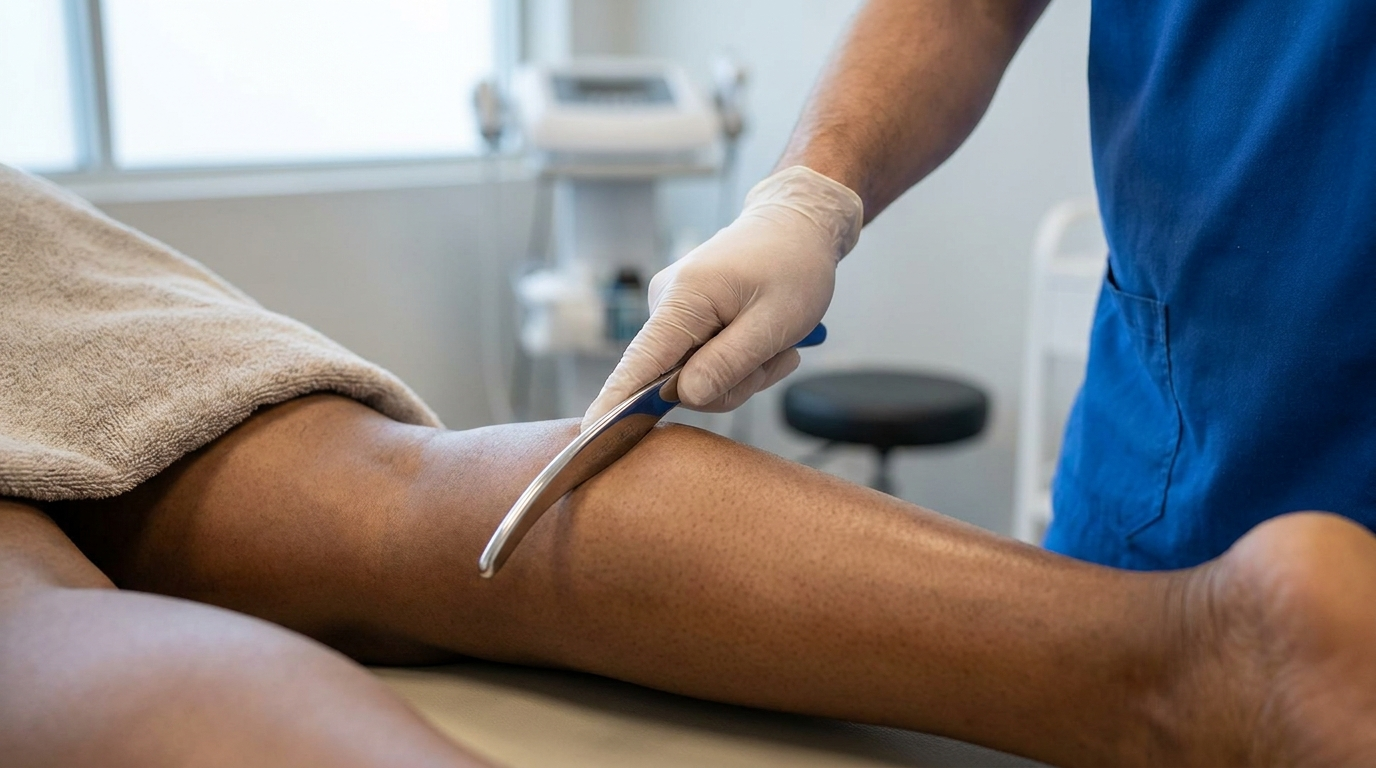
The Graston Technique is a form of instrument-assisted soft-tissue treatment. Instead of using only the hands, the provider uses smooth, specially shaped stainless-steel tools to work along muscles, tendons, and fascia. These instruments let the provider feel and treat areas of tightness, scar tissue, or restriction more precisely than fingers alone can in some cases. It is one approach within a broader family of methods known as instrument-assisted soft-tissue mobilization.
At Apex Health Acupuncture and Chiropractic, the Graston Technique is delivered by trained, licensed providers as part of a wider treatment plan. It is often combined with chiropractic care, massage therapy, and guided movement so the soft-tissue work supports lasting change rather than offering short-lived relief.
How it works
The provider applies a small amount of lubricant to the skin, then glides the instrument over the area at a comfortable angle and pressure. As the tool moves, it can detect rough or restricted patches in the tissue. By working over these areas, the technique is thought to break down adhesions, encourage local blood flow, and stimulate the body’s natural repair response in the treated soft tissue.
It is important to be candid about the evidence. Instrument-assisted soft-tissue work is popular, and some studies report improvements in pain and range of motion for certain conditions, such as heel pain and shoulder restriction. However, much of the research is small or limited in design, and there is no firm professional consensus on the ideal protocol. We view the Graston Technique as a useful hands-on tool with promising but still-developing evidence, best used alongside active rehabilitation rather than on its own.
Conditions it may help
The Graston Technique is most often considered when tight, restricted, or scarred soft tissue is contributing to pain or stiffness. Providers at Apex Health may use it as part of a plan for:
- Plantar fasciitis and chronic heel pain
- Frozen shoulder and shoulder stiffness
- Rotator cuff injury and surrounding muscle tightness
- Neck pain and back pain with muscular restriction
Your provider will decide whether this technique suits your situation after examining the affected area and understanding your goals.
What to expect, step by step
A Graston Technique session is hands-on and usually combined with other care:
1. Assessment. Your provider examines the area, identifies restricted or tender tissue, and confirms the technique is appropriate.
2. Warm-up. The area may be warmed with light movement or another method to prepare the tissue.
3. Lubrication. A small amount of emollient is applied so the instrument glides smoothly.
4. Instrument work. The provider moves the tool across the tissue at a controlled angle and pressure, often for a short, focused period over each area.
5. Active follow-up. The session is frequently paired with stretching or strengthening so the freshly mobilized tissue is reinforced through movement.
Treatment is typically done once or twice a week over several weeks, with the plan adjusted to how your tissue responds.
Does it hurt, and what are the side effects
The Graston Technique can feel intense at times, though it should stay within a tolerable range. You may notice a scratchy or gritty sensation as the instrument passes over restricted areas, and some pressure where the tissue is tight. Your provider should adjust the pressure to keep it productive rather than painful, so always speak up if it is too much.
The most common side effect is temporary bruising or redness over the treated area, since the technique deliberately stimulates blood flow. Some mild soreness for a day or two is also normal. These effects usually fade quickly. Serious complications are uncommon when the technique is applied appropriately by a trained provider.
Who should avoid it or use caution
The Graston Technique is not suitable for everyone. Let your provider know if any of the following apply, as they may change or rule out treatment over the affected area:
- You take blood thinners or have a bleeding or clotting disorder
- You bruise very easily or have fragile skin
- You have an open wound, rash, burn, or active skin infection over the area
- You have a recent fracture, or you have very thin or weakened bone
- You are pregnant (certain areas are avoided)
- You have cancer in the area, an unhealed surgical site, or a blood clot in the region
If the Graston Technique is not appropriate, your provider can suggest gentler alternatives such as massage therapy, active release technique, or stretch therapy. Matching the method to your tissue and tolerance is part of good care.
Book an appointment in NYC
- Midtown — 280 Madison Ave, Suite 800 · (212) 242-3210
- Downtown — 217 Broadway, Ste. 512 · (347) 213-7035
- Chelsea — 37 West 20th St, Ste 1010 · (646) 935-9284
This page is for general information and is not a substitute for personalized medical advice, diagnosis, or treatment.
Frequently asked questions
Does the Graston Technique hurt?
It can feel intense, with a gritty or scratchy sensation over tight areas, but it should stay tolerable. Tell your provider if the pressure is too much so it can be adjusted.
Will I bruise afterward?
Some temporary bruising or redness is common, because the technique deliberately increases local blood flow. It usually fades within a few days.
How is this different from a regular massage?
A massage uses the hands, while the Graston Technique uses smooth steel instruments to find and work on restricted or scarred tissue more precisely. The two are sometimes used together.
How many sessions will I need?
Treatment is often done once or twice a week over several weeks. Your provider will adjust the plan based on how your tissue responds.
Does the Graston Technique actually work?
Some studies show improvements in pain and range of motion for conditions like heel pain and shoulder stiffness, but the research is limited. It works best alongside stretching and strengthening.
Can I exercise after a session?
Usually yes, and gentle movement is often encouraged. Your provider may advise easing off intense activity if the area is sore.
Who should avoid the Graston Technique?
People on blood thinners, those with bleeding disorders, fragile skin, recent fractures, infections, or certain pregnancies should discuss alternatives with their provider first.
Resources
- Instrument-Assisted Soft-Tissue Mobilization: Commentary on Clinical Practice Guidelines
- Instrument-Assisted Soft Tissue Mobilization: A Systematic Review and Effect-Size Analysis
- Instrument-Assisted Soft-Tissue Mobilization for Chronic Plantar Heel Pain: A Pilot Study
- Therapeutic Effectiveness of Instrument-Assisted Soft Tissue Mobilization for Soft Tissue Injury